
Getting big results on a small budget ultimately comes down to focusing on what search engines reward. That means relevant content, a well-structured website, and consistent local SEO effort. Affordable SEO services can make that possible for small businesses.
And yet, a lot of small business owners assume SEO is only for big companies with deep pockets. That assumption quietly costs them traffic, leads, and customers every single month. With the right approach, even a modest budget can drive organic traffic, pull in local customers, and build your visibility in search results over time.
So where do you start? This article walks you through how to build a cost-effective SEO strategy that fits your budget and still delivers. Let’s get into it.
What Is Affordable SEO for Small Businesses?

Affordable SEO is search engine optimization priced for what small businesses can realistically spend. In practice, it basically means instead of paying for every visitor as you do with ads, your website earns its position in search results and holds it.
Let’s take a quick look at what’s included:
- Organic Rankings vs. Paid Ads: A well-optimized page brings in traffic for months or even years. Paid ads, on the other hand, stop delivering the moment your budget runs out.
- What It Covers: Most affordable SEO services include keyword research, on-page SEO fixes, and local SEO setup. These three areas make small businesses findable on Google, and they’re where your budget delivers the most value early on.
- Why Google Rewards It: Low-cost SEO that follows Google’s guidelines builds trust with search engines over time. Sites that earn that trust rank higher in search results than those relying on shortcuts.
Start here, and your SEO efforts build on each other with every passing month. The next section shows you exactly how to set that plan up on a budget.
How to Build a Small Business SEO Strategy on a Budget
Most small business owners assume SEO costs thousands per month. It doesn’t because, at the end of the day, results come from what you focus on, not the size of your budget. Our tests revealed that sites targeting keyword research, high-impact pages, and progress tracking consistently ranked better.
Here’s how to approach each one.
Start With Keyword Research
Here’s a quick tip: not every keyword is worth targeting.
For example, a florist in Austin targeting “same day flower delivery Austin” will pull in far more relevant traffic than one targeting just “flowers.” That’s the whole point of keyword research: finding what your local customers are already typing into Google.
What’s more, tools like Google Trends show you which search queries are gaining traction in your area, so you won’t be guessing.
Focus on High-Impact Pages First
Your homepage, main service page, and contact page are where potential customers land first. These are the pages that directly connect to your services and drive real business outcomes. A good SEO strategy starts here.
Use Free Tools to Track Progress
Google Search Console shows you exactly how your website performs in Google search. You can see which pages rank, which search queries bring people in, and where your SEO campaigns are paying off. Without that data, you’re basically making decisions based on guesswork, and that’ll get expensive quickly.
Once you know where your website stands, fixing it becomes a lot more straightforward. On-page SEO is where that work happens.
On-Page SEO: The Free Wins You Shouldn’t Ignore
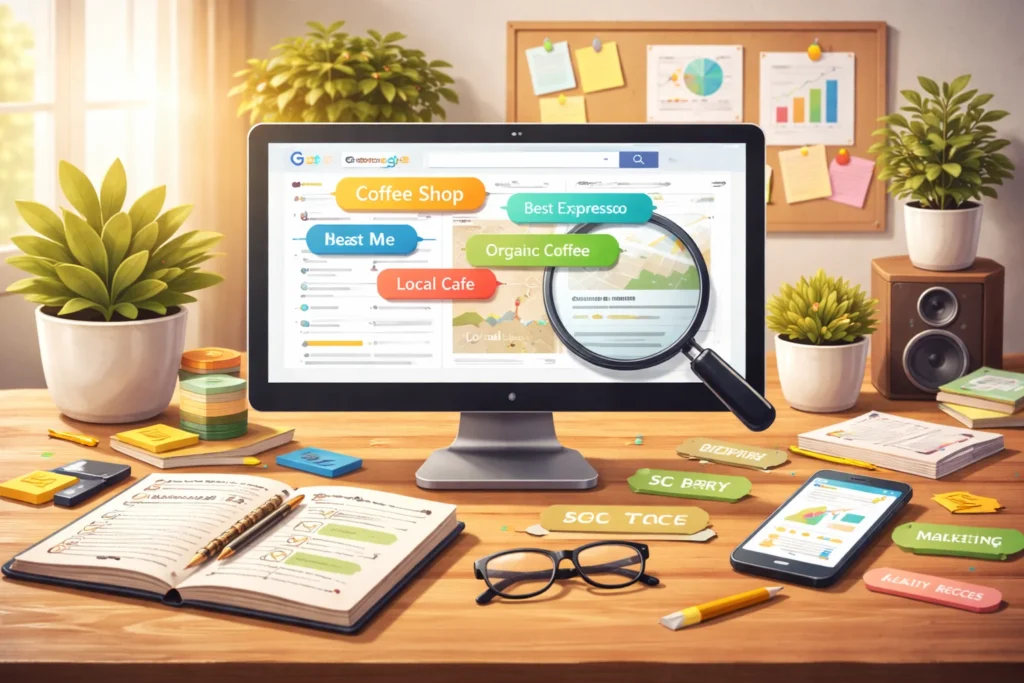
On-page SEO costs nothing to do yourself. It covers the changes you make directly on your website, and Google pays close attention to all of them. Google’s SEO Starter Guide is a solid reference point while working through your site.
Focus on these areas first.
- Title Tags and Meta Descriptions: Believe it or not, fixing a single title tag can shift where your page shows up in Google. From there, your meta description does the next job, giving potential customers a clear reason to click your link over everyone else’s.
- Keyword Placement on Relevant Pages: Relevant keywords placed naturally on your relevant pages help search engines understand what each page is about. The problem is that forced placement hurts your rankings, so write for your reader first.
- Site Structure and Internal Links: Internal links tell Google how your pages relate to each other, which directly influences how each page ranks in search results. And when your site structure is clean, search engines can index every page without missing anything.
These three areas are free to fix and worth doing before anything else. Get them right, and your pages give search engines what they need to rank. From there, local SEO is where your visibility really starts to grow.
Local SEO: How to Show Up in Google’s Search Results Near You
When someone nearby searches for what you sell, local SEO is what determines whether your business shows up or gets skipped. It targets people who are already looking in your area, right now.
Based on what we’ve seen across our client campaigns, businesses with a properly set up local SEO presence start gaining visibility in Google’s search results within the first few weeks. So where do you begin?
These three areas cover the most ground:
Google Business Profile
Based on your Google Business Profile, Google decides when to show your business in local search results. Think of it as your digital storefront, and Google won’t send customers to a shop with the shutters down. So, we always suggest filling out every field because incomplete profiles consistently rank lower.
Google Maps Visibility
Most mobile local searches end up on Google Maps before they ever reach a regular search results page.
Basically, real photos, online reviews, and regular updates all signal to Google that your business is active. And that signal directly improves where you show up in Maps results (a profile with no photos and zero reviews tells a story, too, just not the one you want).
Online Directories and Local Citations
Your business name, address, and phone number need to match exactly across every platform, including Yelp, Yellow Pages, and any local directories in your area.
We emphasize this because search engines cross-check these details across other sites. Besides, anything inconsistent tells Google your listing isn’t reliable, and your local SEO rankings drop as a result.
Getting your local SEO right puts you in front of people who are ready to buy. And once that foundation is solid, it’s worth knowing which low-cost SEO services can take things even further.
Low-Cost SEO Services Worth Paying For
To be honest, most small businesses end up paying for bloated packages full of services that never improve their rankings. And if an agency can’t explain what they’re doing in plain English, that’s a red flag worth paying attention to.
Here’s a breakdown of low-cost SEO services that deliver real results:
Service | Why It’s Worth It |
Technical SEO audit | Finds site errors that block search engines from indexing your pages |
Link building | Earns high-quality links from other sites to build your authority in search results |
Content strategy | Targets the right search queries with pages and posts that grow over time |
Google Business Profile setup | Gets your local SEO foundation right from day one |
These are the services a good SEO company leads with because they fix real problems. HubSpot’s SEO plan guide is a useful reference for prioritizing without overspending. With the right services in place, your SEO campaigns have a solid foundation.
But there’s one more shift happening in search that small businesses need to know about.
Generative Engine Optimization

Google’s results page has changed greatly in recent years. Instead of showing links, it now pulls direct answers from websites and displays them before anyone clicks. Small businesses that write clearly and answer questions directly are already appearing in these spots.
So how do you get there? Well, you’ll need the help of generative engine optimization. It’s the practice of formatting your content so that AI platforms like Google’s AI Overviews pull from your pages when answering user questions.
Answer engine optimization works along the same lines. It focuses on getting your content to appear as direct answers at the top of Google’s search results, including blue links and SERP features.
From our experience, plain and conversational language performs better in these results. In that case, you’ll need to write clearly, answer questions directly, and make sure every page on your site addresses what your potential customers are searching for.
You Don’t Need Deep Pockets to Rank Well
Small businesses often lose ground in search results simply because SEO feels too expensive to pursue. But affordable SEO services exist precisely to close that gap, and they work.
This article walked you through building a small business SEO strategy on a budget. We covered on-page SEO, local SEO, low-cost SEO services, and generative engine optimization, each one a real step toward ranking on Google.
Hold your horses, you don’t have to figure it out alone. Our team at Octillion Corp will take you through every step you need to build real visibility, bring in local customers, and grow your rankings with a plan built around your budget. Your next customer is already searching.
Let’s make sure they find you.